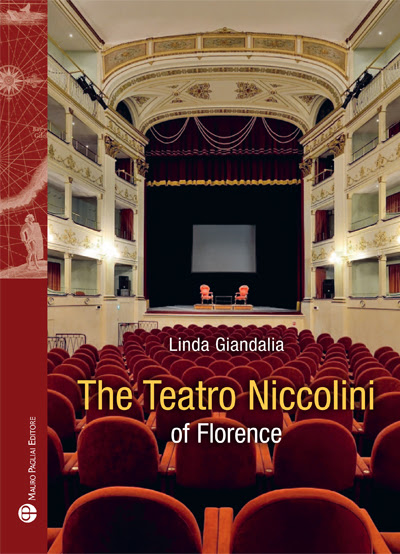
Teatro Niccolini, originally the Teatro del Cocomero, is the oldest theatre with boxes in Florence, and one of the first ‘modern’ theatres in Europe. Its beginnings date back to the mid-seventeenth century, when a group of nobles drew up a rental contract for premises located in the palace of the Ughi family in Via del Cocomero, in which they constructed the theatre.
The author traces the history of the theatre from its origins up to the present, paying particular attention to structural and architectural details. She describes the rebuilding carried out in the eighteenth century to a design by the architect Giulio Mannaioni and the various alterations made in the nineteenth. The story continues up to the 1980s, when famous actors including Vittorio Gassman, Carmelo Bene and Paolo Poli performed in the theatre, and is rounded off by the account of the major renovation completed in 2016 that brought the Teatro Niccolini vibrantly back to life.
Italiano
Il Niccolini, già Teatro del Cocomero, è il più antico teatro a palchi di Firenze e tra i primi teatri “moderni” d’Europa. La sua origine risale alla metà del Seicento, quando un gruppo di nobili prese in affitto alcune stanze di palazzo Ughi in via del Cocomero costruendovi il teatro.
Con un occhio particolarmente attento ai dettagli strutturali e architettonici, l’autrice ne traccia la storia dalle origini fino ai giorni nostri, dando spazio alla ricostruzione subita nel Settecento su progetto dell’architetto Giulio Mannaioni e agli interventi di trasformazione del secolo successivo. Fino ad arrivare agli anni Ottanta del Novecento, quando il teatro ospitò artisti come Vittorio Gassman, Carmelo Bene e Paolo Poli, e quindi all’imponente restauro terminato nel 2016, che ha dato il via a una nuova feconda stagione.
Prima pubblicazione: Il Teatro Niccolini di Firenze, Mauro Pagliai, Florence, June 2021
1st English edition: March 2026 (translation: Aelmuire Helen Cleary)
Teatro Niccolini, originally the Teatro del Cocomero, is the oldest theatre with boxes in Florence, and one of the first ‘modern’ theatres in Europe. Its beginnings date back to the mid-seventeenth century, when a group of nobles drew up a rental contract for premises located in the palace of the Ughi family in Via del Cocomero, in which they constructed the theatre.
The author traces the history of the theatre from its origins up to the present, paying particular attention to structural and architectural details. She describes the rebuilding carried out in the eighteenth century to a design by the architect Giulio Mannaioni and the various alterations made in the nineteenth. The story continues up to the 1980s, when famous actors including Vittorio Gassman, Carmelo Bene and Paolo Poli performed in the theatre, and is rounded off by the account of the major renovation completed in 2016 that brought the Teatro Niccolini vibrantly back to life.
Italiano
Il Niccolini, già Teatro del Cocomero, è il più antico teatro a palchi di Firenze e tra i primi teatri “moderni” d’Europa. La sua origine risale alla metà del Seicento, quando un gruppo di nobili prese in affitto alcune stanze di palazzo Ughi in via del Cocomero costruendovi il teatro.
Con un occhio particolarmente attento ai dettagli strutturali e architettonici, l’autrice ne traccia la storia dalle origini fino ai giorni nostri, dando spazio alla ricostruzione subita nel Settecento su progetto dell’architetto Giulio Mannaioni e agli interventi di trasformazione del secolo successivo. Fino ad arrivare agli anni Ottanta del Novecento, quando il teatro ospitò artisti come Vittorio Gassman, Carmelo Bene e Paolo Poli, e quindi all’imponente restauro terminato nel 2016, che ha dato il via a una nuova feconda stagione.
Prima pubblicazione: Il Teatro Niccolini di Firenze, Mauro Pagliai, Florence, June 2021
1st English edition: March 2026 (translation: Aelmuire Helen Cleary)
16,00 €
Spedizioni entro 8 giorni. Perché vale la pena aspettare.











Recensioni
Ancora non ci sono recensioni.